
 Hot-water leaching is faster, but cold-water leaching preserves more of the acorn's delicate flavor and produces a milder, more versatile flour.
Cooking with Forest Nuts: Pairings, Toasting, and a Simple Beechnut Pesto
Foraging wild nuts is only half the pleasure; the other half is figuring out what to do with them in the kitchen. Beechnuts, acorns, hickories, and black walnuts each have their own personality, and treating them all the same way is a missed opportunity. With a little attention to pairing and preparation, forest nuts can move from a novelty snack to a genuine pantry staple.
The first thing to understand is that wild nuts vary enormously in fat content, sweetness, and tannin. Beechnuts are small, sweet, and high in oil, with a flavor that's delicate enough to be overwhelmed by strong spices. Acorns, once leached, are starchy and mild, closer to a grain than a nut, which makes them excellent in baked goods and porridges. Shagbark hickories are rich and sweet, similar to pecans, and can stand up to bolder flavors. Black walnuts are intensely aromatic and slightly bitter, best used in small amounts where their distinctive flavor is the point.
Toasting and Pairing Forest Nuts
Toasting is the single best thing you can do to improve the flavor of any wild nut. A few minutes in a dry skillet over medium heat, or a low oven, brings out the oils and deepens the natural sweetness. Watch closely, because nuts go from toasted to burnt in seconds, especially small ones like beechnuts. Toss them frequently and pull them off the heat as soon as they smell fragrant. Toasting also makes the skins on hickories and beechnuts easier to rub off, which improves texture in baked goods.
Once toasted, think about what each nut likes. Beechnuts pair beautifully with maple, honey, apples, pears, and soft cheeses. They're lovely scattered over a salad of bitter greens or folded into a simple shortbread. Acorn flour is earthy and slightly sweet, and it loves warm spices like cinnamon and nutmeg, as well as molasses, brown sugar, and dried fruit. Hickory nuts are naturals with bourbon, vanilla, and brown butter, and they make an outstanding pie. Black walnuts, with their bold, almost wine-like flavor, are classic in banana bread, oatmeal cookies, and strong cheeses. A little goes a long way.
A Simple Beechnut Pesto
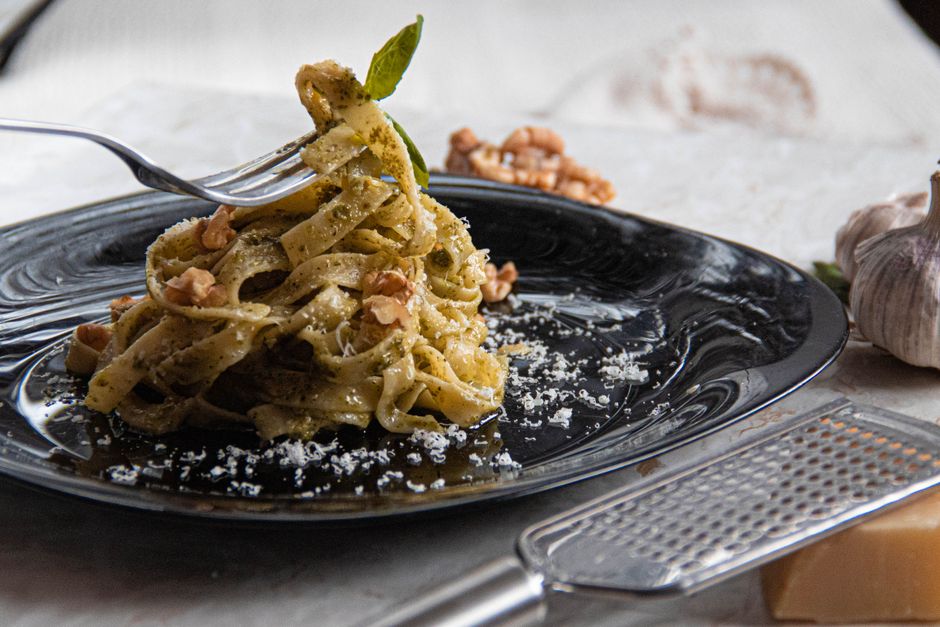
One of my favorite ways to use a modest handful of beechnuts is a pesto that swaps the traditional pine nuts for forest nuts. It's flexible, so use whatever you have. Start with about half a cup of toasted, shelled beechnuts, or a mix of beechnuts and hickory. In a food processor, combine the nuts with a small garlic clove, a generous handful of fresh basil or parsley, and a pinch of salt. Pulse until coarsely chopped, then drizzle in olive oil while the machine runs until you reach a loose, spoonable consistency. Finish with a squeeze of lemon juice and a little grated parmesan if you like. The result is a bright, nutty sauce that's excellent tossed with pasta, spread on toast, or spooned over roasted vegetables.
The same formula works with acorns, though you'll want to use leached acorn meal rather than whole nuts, and the result is more of a thick, earthy paste than a classic pesto. Try it stirred into a squash soup or spread on a sandwich with sharp cheddar. The point is to treat these nuts as ingredients rather than curiosities. Once you start pairing them with the right flavors, you'll find yourself planning autumn foraging trips around what you want to cook, not just what you happen to find.